
Redacting Reality
The COVID origins story gets the Epstein treatment

Tulsi Gabbard had promised for months that she would be declassifying damning documents on COVID origins. Last Friday, under a banner headline insisting “Fauci Funded Wuhan Lab Research That Sparked COVID”, and promising, “New Evidence Fauci Manipulated Intelligence and Lied to Congress”, she put out a press release and a stack of documents alluding to “President Trump’s maximum transparency mandate”. If this is her version of transparency, be sure not to buy windows from her.
The COVID-19 pandemic caused tremendous hardship and pain for millions of our fellow Americans and for countless people around the world. After years of lies, censorship, and cover ups, the American people deserve transparency, truth, and accountability. The tactics used to hide the truth are straight from the deep state playbook: politicized self-serving leaders like Dr. Fauci covered up their own wrongdoing and abuses of power, manipulated intelligence, lied to Congress, and undermined a duly elected President by restricting his access to vital facts needed to keep the country safe. It’s time the American people learn the real story.
- Tulsi Gabbard, Director of National Intelligence, June 18, 2026
The lead document in the package is a Lawrence Livermore National Laboratory assessment. It does not mention Fauci. It does not mention funding. It is a bioforensic analysis of whether the virus could have been modified in a laboratory, and roughly three quarters of it is blacked out or missing. That gap, between what the release says it shows and what it actually shows, is the whole story.
The full list contains 67 documents. Allow me to save you the trouble of reading them. The first four tell you all you need to know.
None of them is evidence of a lab leak, and each fails in a different way. Three of the four were never secret to begin with. And the largest body of evidence bearing on the question, the published case for a natural origin, does not appear at all. This is not a disclosure. It is a selection. And once you see it as a selection, the redactions stop looking like the protection of secrets and start looking like something else.
Document one: a quarter of a report, presented as the whole
The lead exhibit is a May 2020 Lawrence Livermore assessment titled “China: Conditions Present for Laboratory Modification and Release of Human-Adapted Coronavirus in Wuhan in Late 2019.” It runs eight pages. The release gives us five. Of those five, close to two thirds of the text is redacted. Do the arithmetic and the public sees less than a quarter of the full report.
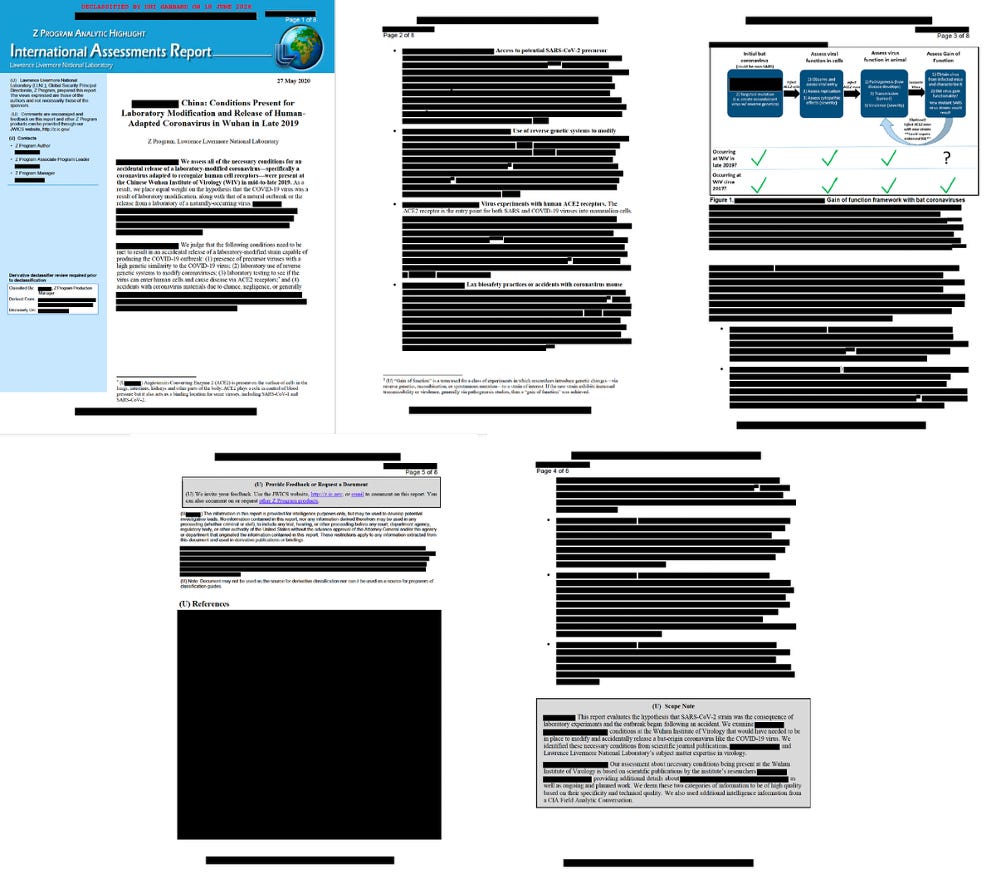
The single most telling redaction is the reference section. It is blacked out in its entirety. A reference list is a list of published papers. Published papers are, by definition, already public. There is no sources-and-methods rationale for hiding a bibliography of open literature. The one part of the document that would let a reader trace its reasoning back to checkable sources is the one part removed.
That is redaction in the form everyone recognizes. It announces itself. You can count the bars and measure the proportion. What remains after the bars is a title that states a conclusion and a single graphic, Figure 1, that lays out a gain-of-function framework with check marks down most of the steps and a question mark at the one that matters, the gain of function itself. Strip away the discussion and that figure stops being an illustration of an argument and becomes the argument. A figure cannot hedge. A check mark has no confidence interval. A diagram of a pathway from bat coronavirus to human-adapted virus reads as how it happened, not as one hypothesis under evaluation. Show only the lab scenario and hide the analysis, and the scenario becomes the conclusion by default, because it is the only thing left to look at.
Now the part the release works hardest to obscure. This is a Lawrence Livermore document, and Lawrence Livermore is a Department of Energy laboratory. Its Z Program is the DOE’s intelligence and bioforensic capability, the same capability that underlies the DOE’s assessment of COVID’s origins. So, this is not some outside opinion. It is the DOE’s own shop, assessing the precise question the DOE would later grade.
There is more to say about what came later. The DOE did not stay undecided. In February 2023 it shifted to low confidence in a lab origin, and the CIA followed with a low-confidence lab-leak assessment of its own. Neither shift appears to have been driven by new intelligence, and both were purportedly grounded in a rereading of the scientific literature rather than fresh collection. I have written elsewhere about the legitimate questions those shifts raise. For the document in front of us, what matters is simpler: when this assessment was written in 2020, and through the intelligence community’s 2021 review, the DOE’s position was that the evidence did not support a conclusion about origin at all.
Which sets up a question the release cannot answer in its favor. This document either fed the DOE’s judgment, or it was an early draft of what fed it, or it was set aside. Take each in turn. If it was used, it was one input into a judgment that asserted the evidence was inconclusive, now presented as definitive of lab origin. If it was an early draft, then a superseded version, something the DOE’s own process moved past, has been resurrected, stripped to a quarter, and waved as proof. And if it was set aside, there is no chance the DOE did not know its own laboratory had produced it. So why ignore it, and if they ignored it, why is it the lead exhibit now? There is no fourth possibility. Used, drafted, or set aside, every branch ends in the same place: a document being presented as something its own source institution never treated it as.
In other words, the first piece of evidence presented by Gabbard is a slice of a six year old report so heavily redacted that it is unreadable that, according to the DOE’s own assessment of the evidence, did not support the conclusion that the lab leak played a role in the pandemic. A quarter of one report, the most lab-leaning component the DOE ever produced, from an agency whose confidence in that conclusion never exceeded low, under a headline about a man the document never names.
Document two: a meeting he was supposed to attend
The second document is an agenda. It is a February 3, 2020 expert meeting convened by the National Academies of Sciences, Engineering, and Medicine, titled “Rapid Response for Assessment of Data Needs for 2019-nCoV.” Its stated objective was to assess what data and samples were needed to understand the new virus and respond to the outbreak. Anthony Fauci is on the agenda for a ten-minute slot to give the NIH perspective.
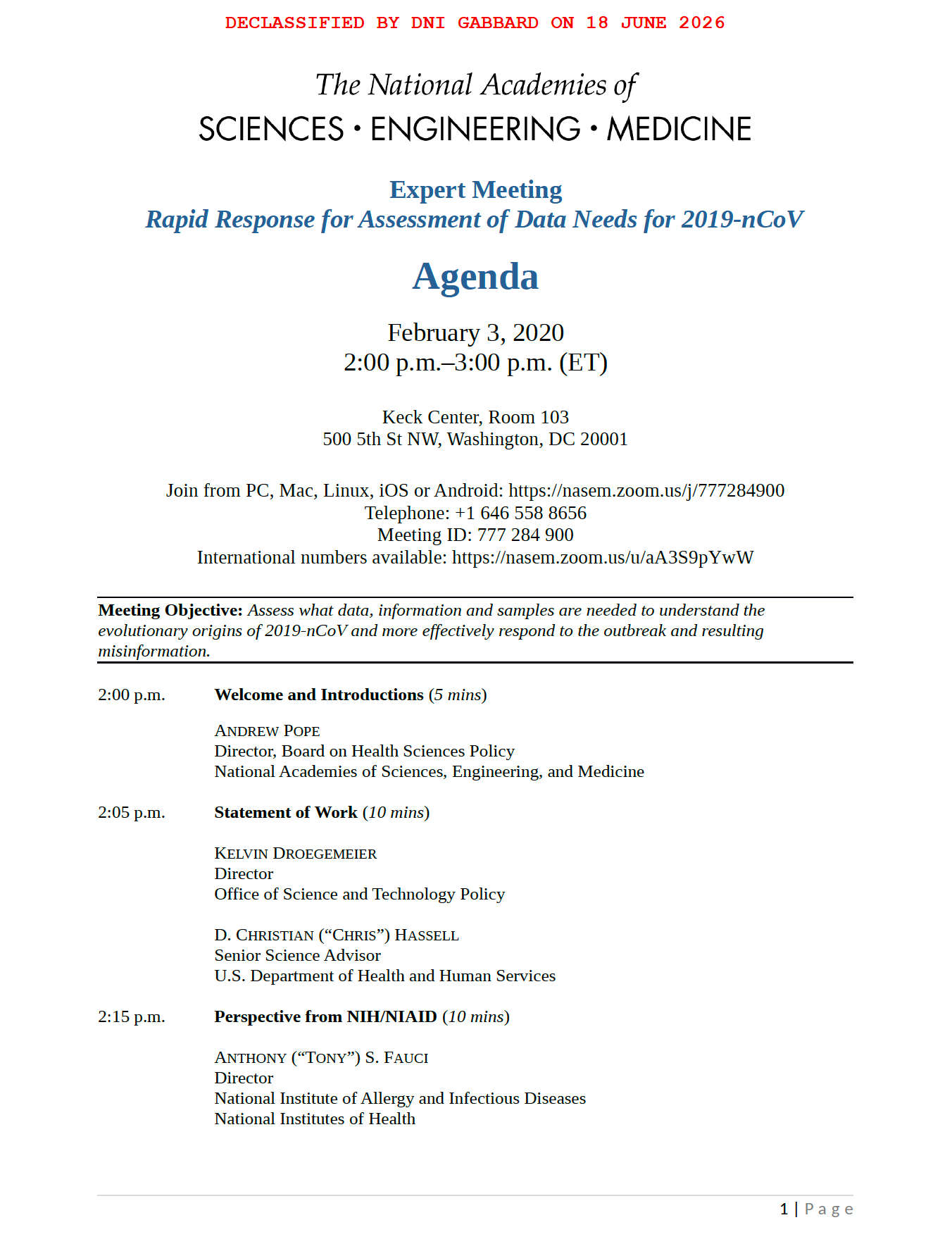
That is the entire document. An agenda showing that the nation’s senior infectious-disease official was scheduled to speak, briefly, at a meeting about responding to an emerging pandemic. This is precisely the meeting he would have been expected to attend. Presenting his presence on a list of speakers as evidence of anything other than him doing his job is the oldest trick there is. The document refutes the implication on its own face. We cannot even see what was discussed. We can see only that he was there, which is exactly where he should have been.
The only remarkable thing about this easily available, publicly accessible document is that it somehow required declassification.
Document three: the wrong paper, surfaced from a sea of right ones
The third document is a 2016 research article from Virologica Sinica, authored at the Wuhan Institute of Virology, titled “Assembly of long DNA sequences using a new synthetic Escherichia coli-yeast shuttle vector.” It also carries, across the top, the words declassified by DNI Gabbard on 18 June 2026, stamped on a journal article that has been freely available since 2016 and was never classified in the first place.
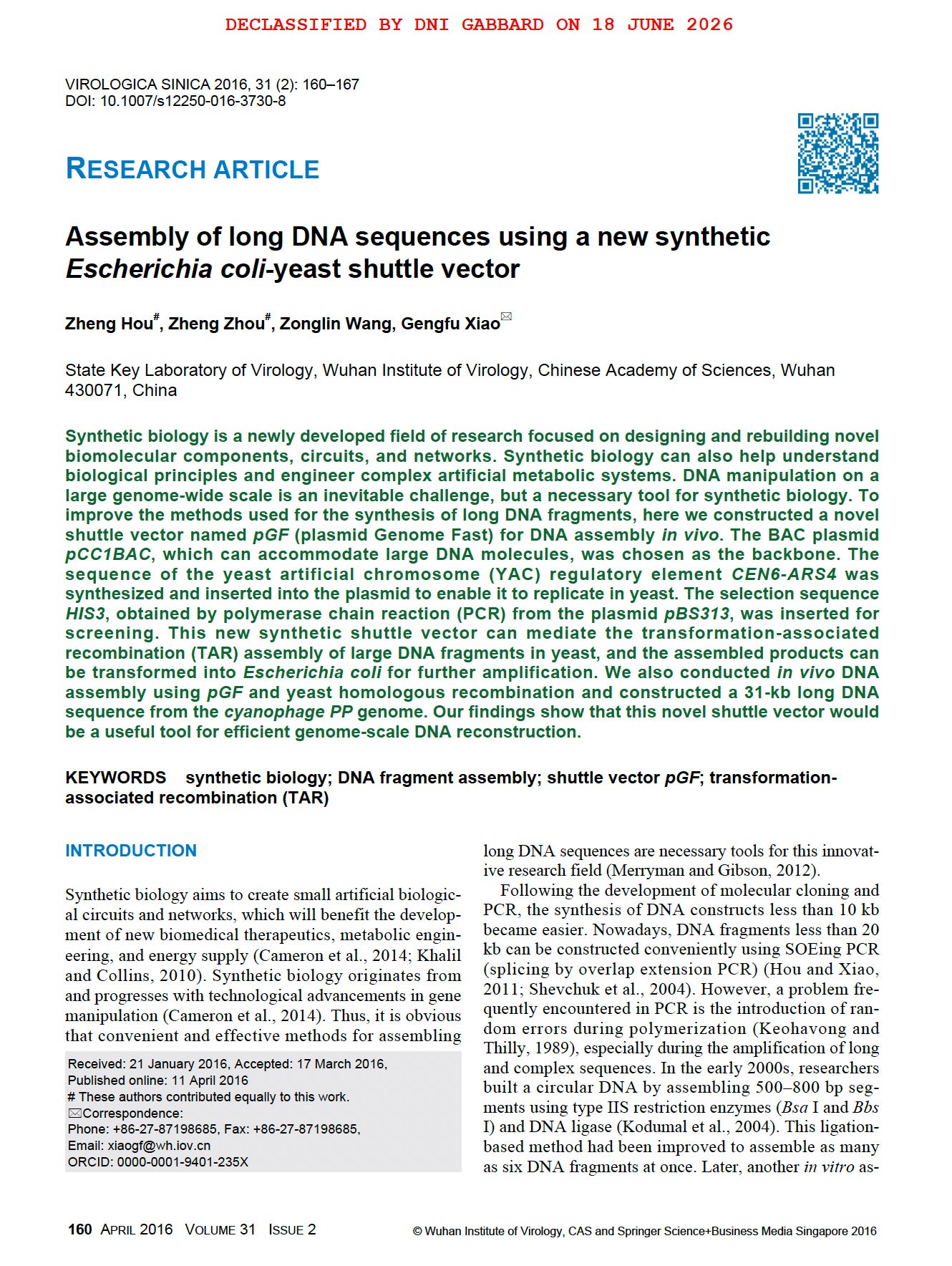
Read the abstract and the relevance evaporates. The paper describes a cloning tool, a shuttle vector for assembling long stretches of DNA, demonstrated by reconstructing a sequence from a cyanophage, a virus that infects pond bacteria. SARS-CoV-2 is an RNA virus. This is a paper about assembling DNA, tested on an organism with no relation to coronaviruses. It appears to support the idea of genetic manipulation only for a reader who does not supply the context, who sees “Wuhan,” “synthetic biology,” and “genome assembly” and stops there. The apparent relevance survives exactly as long as you do not look at what the paper is actually about.
But the deeper problem is the selection. Of the entire universe of papers that bear on the origin of COVID, why this one? The release explicitly withholds a set of scientific references, the blacked-out bibliography of document one, and then reaches into the literature to surface a single paper that looks like it supports manipulation but does so only out of context. The real references, hidden. The misleading one, promoted. Why that one? The question answers itself, and the answer is the thesis of the whole release: it was chosen for the impression it creates, not for what it shows.
Document four: a demand for an investigation, dressed as the result of one
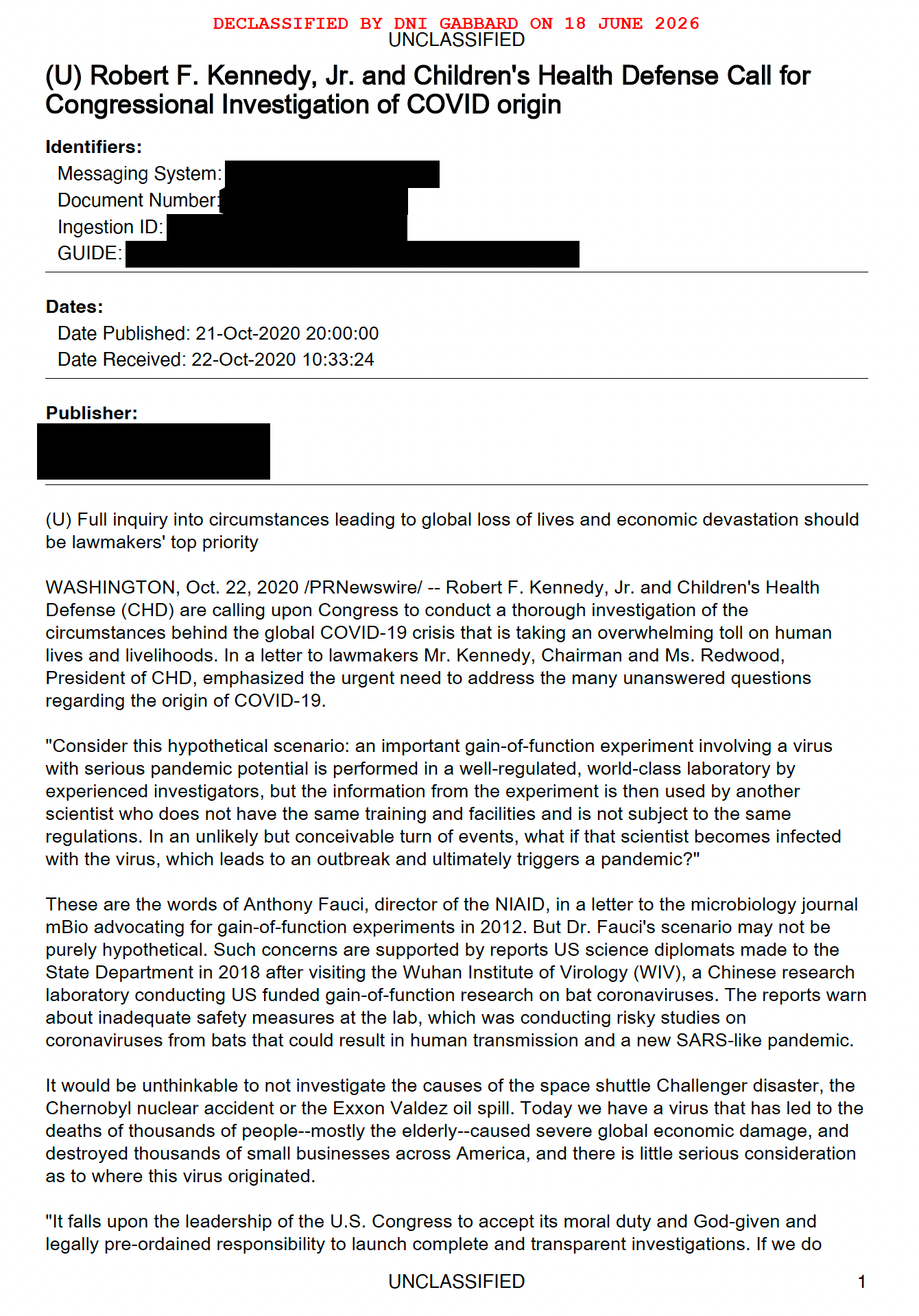
The fourth document is a press release from Children’s Health Defense calling for an investigation into a possible laboratory origin. It does not discuss any of the other documents in the package. It presents no findings. It is an advocacy group asking for an inquiry.
A call for an investigation is not evidence. It is the absence of a conclusion, formalized into a demand. Including it in a package presented as evidence is circular: the request for proof is offered as if it were proof. It belongs to the genre of documents that generate the appearance of activity around a question without adding anything to its answer.
What three of the four have in common
Step back and look at the four documents the release chose to lead with. The Livermore assessment is the only one that was ever classified, and even it is mostly blacked out. The other three, the NASEM agenda, the cyanophage paper, the Children’s Health Defense press release, were public before June 18, 2026. They required no declassification. The stamp they carry is decoration.
That is the tell. To assemble even the front of this list, a yearlong review went through and cleared material that was never secret. A meeting agenda. A published paper. An advocacy group’s press release. If this is what topped the package after a year of work, then the work was not the disclosure of hidden intelligence. It was curation. The release is mostly a selection of public material, with one heavily redacted government document at the front to lend it the weight of secrecy.
And the moment you recognize it as a selection from public, abundant material, the silences become choices. The reviewers had access to everything already public. They chose a cyanophage cloning paper. They did not choose the published epidemiology placing the outbreak’s earliest cases at the Huanan market. They did not choose the 2022 work in Science on the market as the early epicenter and on the virus’s two separate introductions. They did not choose the environmental sampling, or the WHO-convened studies, or the broad body of peer-reviewed analysis pointing toward a natural spillover. That work is large, public, and directly on point. Its complete absence from a package this thorough in its review of trivia is not a limitation of what was available. It is a decision about what you would be allowed to see.
It is not about what is there. It is about what is not there.
We have seen this method before
There is a template for this, and it is recent. Late in 2025, the Department of Justice began releasing the Epstein files, several million pages, after months of delay, under the banner of historic transparency. What came out was a fraction, heavily redacted. Entire documents emerged fully blacked, including a 119-page grand jury file and hundreds of consecutive pages rendered unreadable.
And the redaction was not neutral. Attorneys for survivors reported that the department had failed to redact the identities of at least 31 people who had been abused as children, while the names of accused men were withheld. Virginia Giuffre’s brother put it plainly: they were redacting the names of perpetrators and exposing the names of victims, the opposite of what the law was meant to do. The survivors themselves named the mechanism. Redaction deployed not to protect, but to shape. Concealment of the powerful, exposure of the vulnerable, the whole of it wrapped in the language of transparency.
The two releases are not equivalent in their human cost. Nothing in the COVID package carries the cruelty of exposing abused children. But they are the same method. Hold a vast body of material. Release a curated fraction. Redact to shape the impression. Brand the result transparency. The Epstein files are where that method showed its face most grotesquely, which is exactly why they are useful here: they prove the method is real, in use, and recent. The COVID release is the same playbook, run on the question of where a pandemic came from.
That is the opposite of transparency. It is the weaponization of redaction.
Not transparency
Maximum transparency was the banner. What was delivered in the first four documents is a quarter of one document, three public files wearing a declassification stamp, a misleading paper chosen from a literature of better ones, and the wholesale absence of the evidence that points the other way. The connective reasoning that would turn any of it into a case is redacted or simply missing. You are handed a conclusion at the top, a pile of mostly-public paper below, and an invitation to assume the pile proves the conclusion.
There levels and types of redaction. You can black out a sentence. You can withhold three pages of eight. You can surface one paper and bury the rest. You can omit an entire field of evidence and leave the omission unmarked, which is the most complete redaction of all, because it leaves no bar to count and no edge to see. At every scale the operation is the same: remove what would let a reader test the claim, supply a presumption to fill the gap, and present the result as proof.
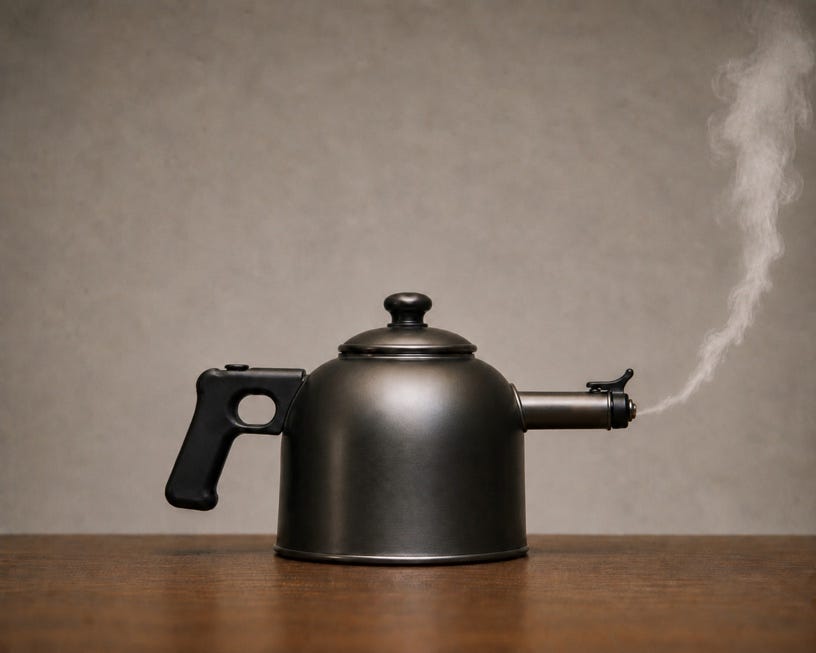
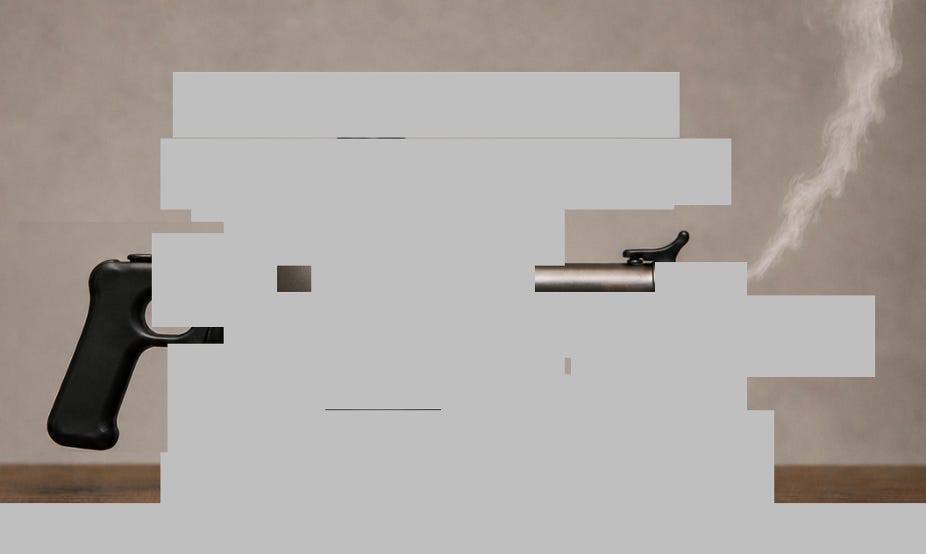
The document release relies on concealment, at whatever scale leaves the fewest fingerprints, to manufacture the appearance of a case while withholding the means to check it. You are shown a bit of smoke and a bit of metal and told there is a smoking gun. Pull back the mask and it is a kettle.
After reading only your first couple of paragraphs, I took a quick look at Part-1, then headed straight for your 'Comments' (I hate people like me) to write that the absurd over-redaction is super-food for "skeptics" and conspiracists ... Which you discuss.