
Disruption
Hantavirus and the Consequences of Touching the Wild

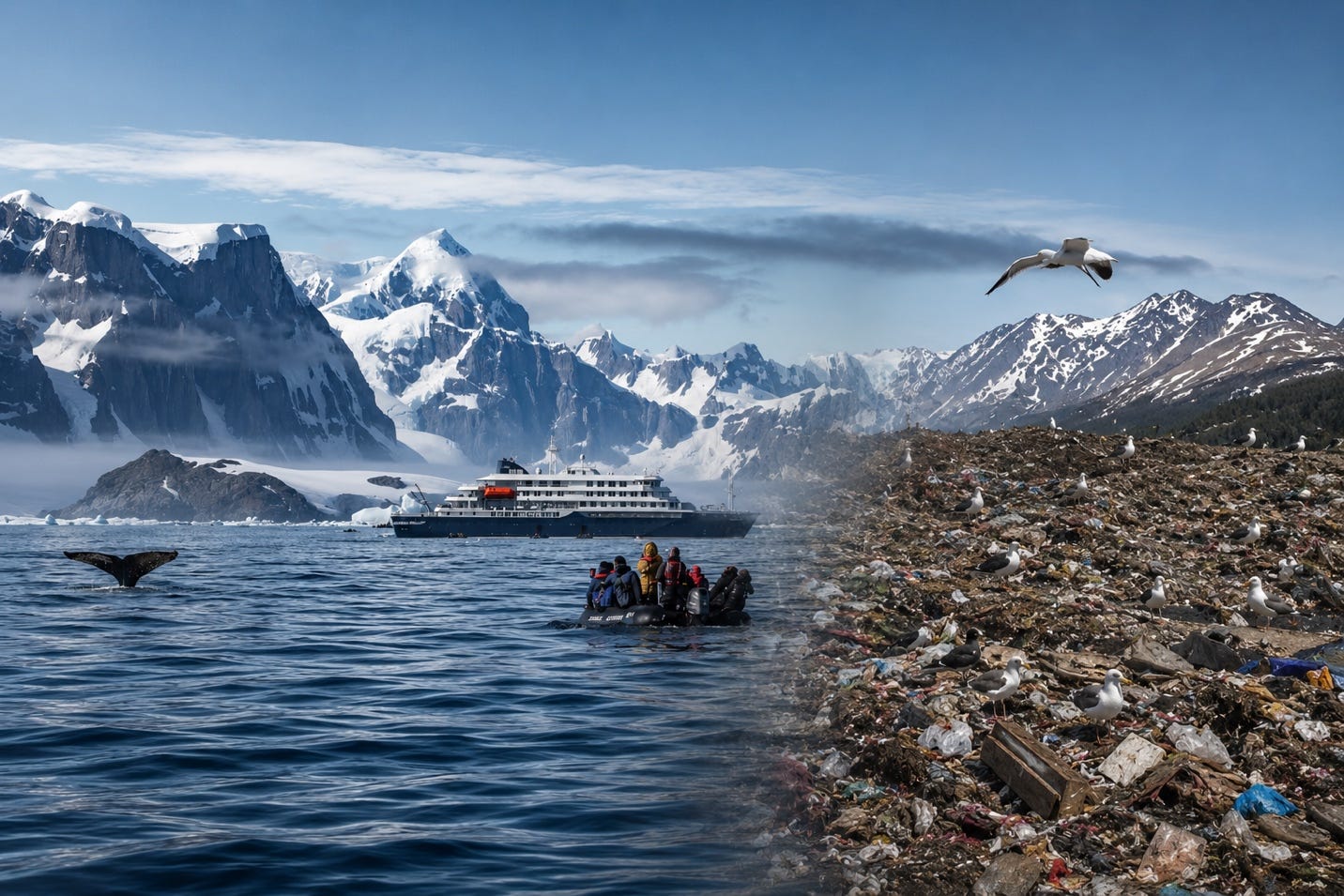
Disruption
The Dutch couple had spent the past four months visiting the wild places of South America. One of the last stops on their itinerary was a dump.
There they could watch the swirl of scavengers fighting for the bounty that humans had discarded. Of particular interest were the raptors. Among them, the couple might even have been lucky enough to see the white-throated caracara, a birder’s coup.
The raptors were searching for their own prizes, among them, the pygmy rat a native of Argentina drawn to the same treasure trove. Unfortunately for the couple, there was one other species drawn to the landfill that day, a particular strain of hantavirus carried by about 5% of the pygmy rats in Argentina. The virus contaminated the feces of the rats and an unfortunate gust of wind had carried just enough of it across the garbage strewn landscape to the couple and into the man’s lungs.
The birds, and the rats and the birders and the virus converged on that spot in response to a massive disruption in the ecosystem of southern Argentina. A vast pile of refuse from a city invented for tourists in search of the untainted majesty of the world’s most remote continent had drawn them all.
Ushuaia spent the first 100 years of its history struggling to find a reason to exist. When Darwin sailed through in the Beagle, the landscape left him awestruck. “It is scarcely possible to imagine anything more beautiful than the beryl-like blue of these glaciers, and especially as contrasted with the dead white of the upper expanse of snow.” Thirty years later the Catholic Church set up a mission there to convert the indigenous people. Ultimately, most of them died from European diseases and the attacks of settlers. Then it became a penal colony with the beginnings of a city built by prisoners. But it was the tourist trade that drove it from an outpost of a few thousand to a city of 80,000.
Those travelers also built the mountain of garbage that drew the rats, that drew the raptors, that drew the birders. A sprawling disturbance that created radical, unpredictable change in the ecosystem.
Touching the Wild
The MV Hondius is part of a growing fleet of cruise ships that bring over 100,000 people from across the planet to touch and be moved by one of the world’s wildest, most remote places. The fact that this landscape is literally disappearing plays into its appeal. But each time humans touch the wild a bit of that wildness disappears. We cannot touch without consequence.
In the case of Antarctica, those consequences are substantial. In addition to the waste accumulating in Ushuaia, a single traveler from Europe or the United States generates more CO2 in a single trip than the average person does in a year. And the volume of travelers has increased from 7,000 to over 100,000 per year in the past 35 years.
Somewhere in the Antarctic Ocean, the birder developed a fever. Hantavirus infections creep up slowly. For several days he felt feverish with some combination of muscle aches, nausea, and a cough. He probably thought he had picked up the flu or food poisoning, or something in between. Then, after a few days, it struck.
As the virus hit his lungs, they filled with fluid. He struggled to breathe. His heart struggled to supply his body and itself with the oxygen he needed to survive. On April 11, ten days after boarding, he died.
One can only imagine what the next week felt like for his widow as the ship turned north and crossed one the most remote, inhospitable stretches of ocean on the planet from Antarctica to South Georgia Island with her husband’s body in cold storage. She was probably quarantined to her cabin, likely the very cabin where she had watched the virus take her husband. Then, as they reached the island, she felt the beginnings of those same symptoms.
Unable to disembark on that remote island, she stayed on the ship with her symptoms festering. They continued as the ship continued its northward passage to the next speck of land, St Helena, a four-day-sail. In St. Helena, she boarded a plane to South Africa with her husband’s body in the hold. The flight did not go well.
On the flight, she began to feel the effects of the same pulmonary edema that had taken her husband. An ambulance met the plane. A day later, she died. The infection was not diagnosed until she reached the hospital. The man’s death was a tragedy. His wife’s death signaled a public health crisis. It meant a rare South American hantavirus capable of person-to-person spread had found a path to new territory.
We cannot touch without consequence. But the ultimate consequence is ours. Nature is neither other nor cute nor fragile. On a global scale we cannot feel the consequence of our own actions, but we do feel the consequence of the collective action of our fellow travelers. We do not need to worry about saving the planet. It did fine for billions of years before our arrival and will go on regardless. The question is only whether we can save the humans.
References
Pini, N., Resa, A. J., Laime, G., & Gardeñez, F. (2010). Temporal and spatial host abundance and prevalence of Andes hantavirus in southern Argentina. Emerging Infectious Diseases, 16(4). https://pubmed.ncbi.nlm.nih.gov/20645121/
World Health Organization. (2026, May 2). Hantavirus cluster linked to cruise ship travel, Multi-country. Disease Outbreak News (DON599). Retrieved from https://www.who.int/emergencies/disease-outbreak-news/item/2026-DON599
IUCN. (2023). Impacts of tourism in Antarctica. Retrieved from https://iucn.org/resources/issues-brief/impacts-tourism-antarctica
CBC News. (May 7, 2026). A timeline of the deadly hantavirus outbreak that unfolded on a cruise ship. Retrieved from https://www.cbc.ca/news/world/hantavirus-outbreak-timeline-cruise-ship-9.7190889
Oceanwide Expeditions. Atlantic Odyssey incl. Antarctic Peninsula to Cape Verde. 2027 Cruise dates https://oceanwide-expeditions.com/antarctica/cruises/pla32d27-atlantic-odyssey-incl-antarctic-peninsula-to-cape-verde
You have given me a place I can point to as to why I have not and will not travel to Antarctica or the Galapagos or any fragile wild place. I know the beauty is beyond belief but I there are other ways to experience these places and learn from them